This Autumn term, we have lots of exciting learning to be doing! Here's a brief run down of what you can expect:
PE Days - Thursday and Friday
Home learning:
Daily home reading, logged in reading record. This can be a home book, school banded book or school library book.
Spelling - weekly lists will be posted on Class Dojo and available on Ed Shed, spellings will be explicitly taught in class and tested each Friday.
Times Tables - log on to TTRS frequently, it's essential to know your times tables by heart and be able to recall them quickly to help with all of the other Y6 maths methods.
Maths.co.uk home learning will start before the end of the first half term, weekly tasks of 10 questions linked to classroom learning will be set for Y6 pupils to complete.
SPaG.com home learning will start before the end of the first half term, weekly tasks of 10 questions linked to classroom learning will be set for Y6 pupils to complete.
Y6 Autumn Topic Web
Maths
We will be following White Rose maths a lot of the time. Our first blocks will be:
- Place Value
- The 4 operations
- Fractions
- Geometry
How can you help at home?
- Times table and division fact knowledge is incredibly important in Year 6. Practise them weekly! Remember you have your log-ins for TTRS
- Practise the 4 operations- column addition, column subtraction, column multiplication and bus stop method division. You can use the weekly arithmetic tests to help with this. We will complete them in school each week and will send them home once we've marked them and noted down the scores. Just let us know if you need any help with any of the methods we teach - no question will seem too silly!
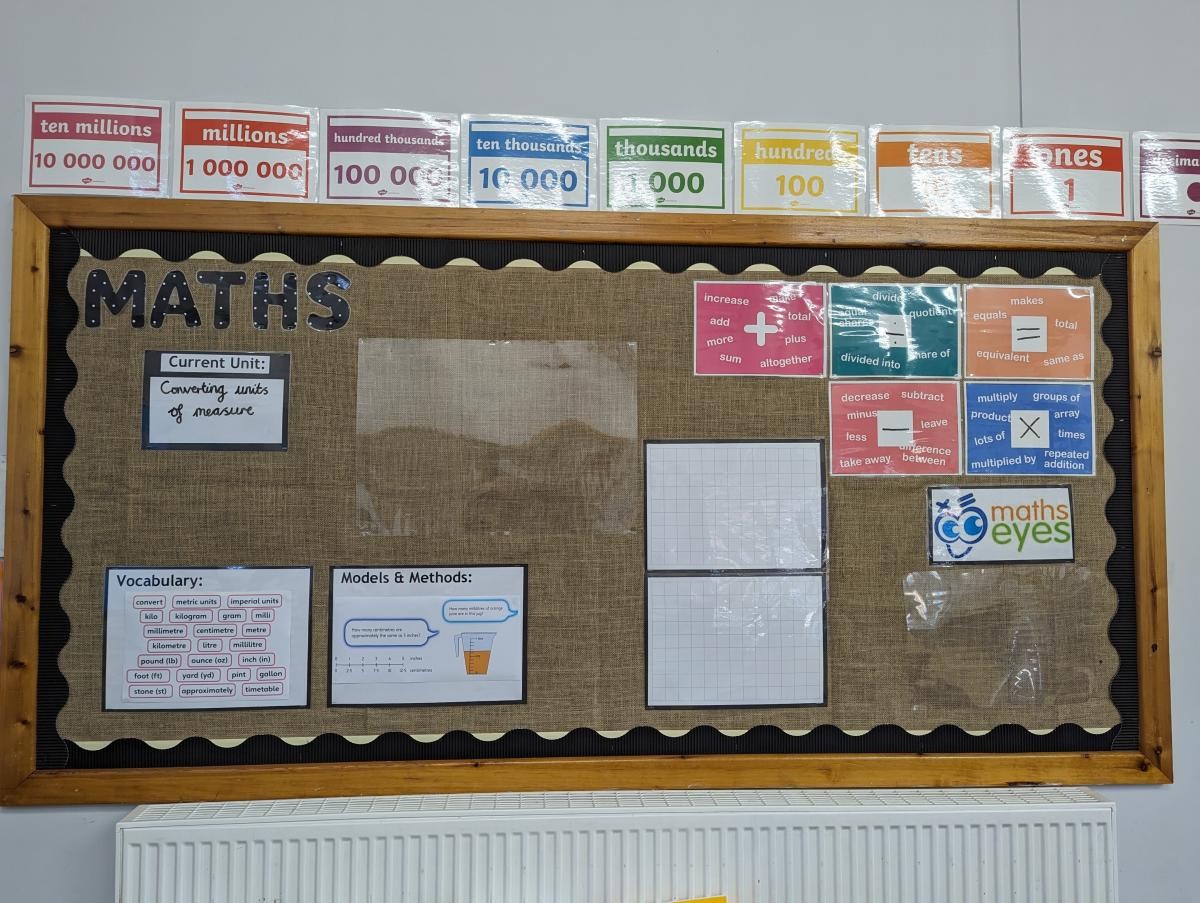
Our maths working wall.
English
We are studying Once by Morris Gleitzman, Rose Blanche and the Arrival across the Autumn Term. These books will enable us to produce a wide variety of texts, but the focus will often be on descriptive language.
The text types we will produce include:
Letters
Narrative
Poetry
Explanation texts
Non-chronological reports
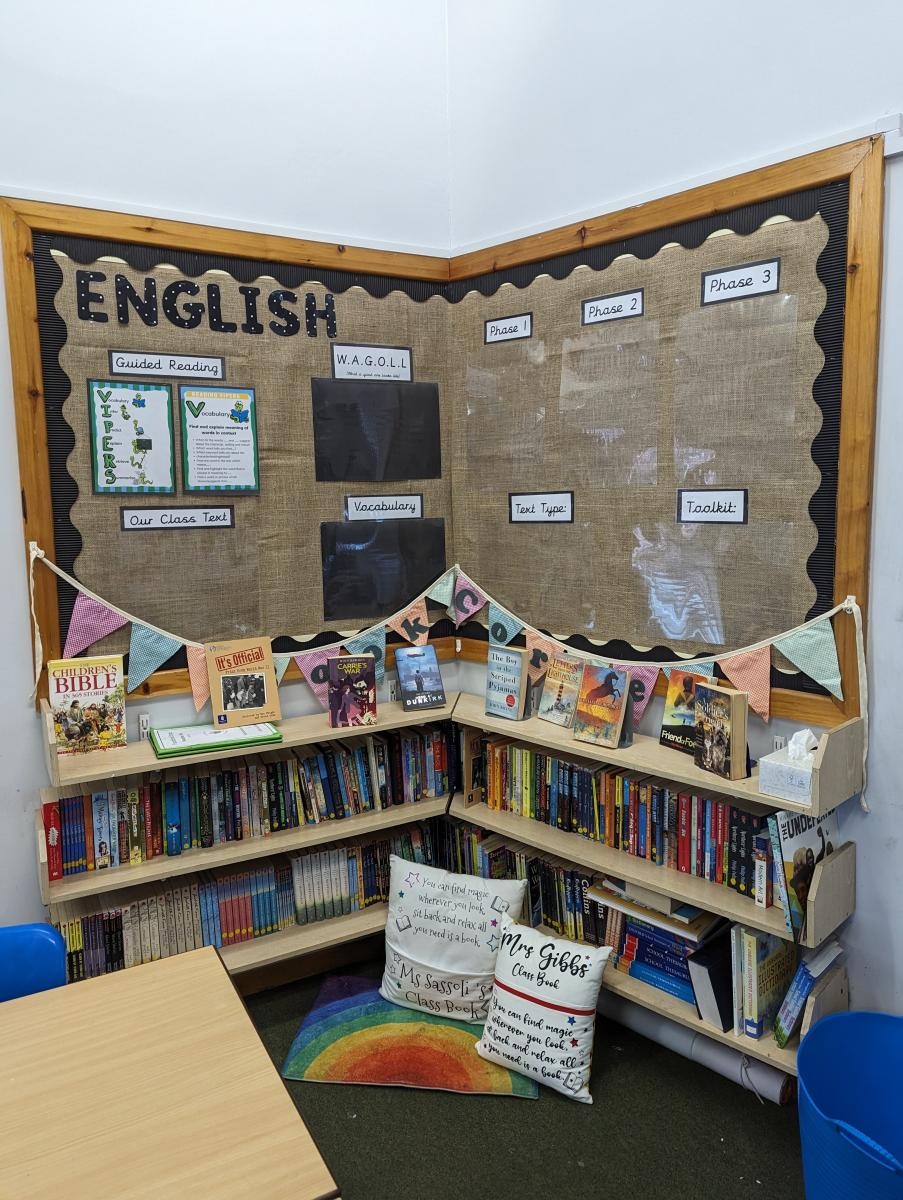
Our English working wall and book corner.
Topic
We are studying 'The World at War', in which the focus is World War 2. If you would like to bring in memorabilia or family keep-sakes to share or display in the classroom, feel free!
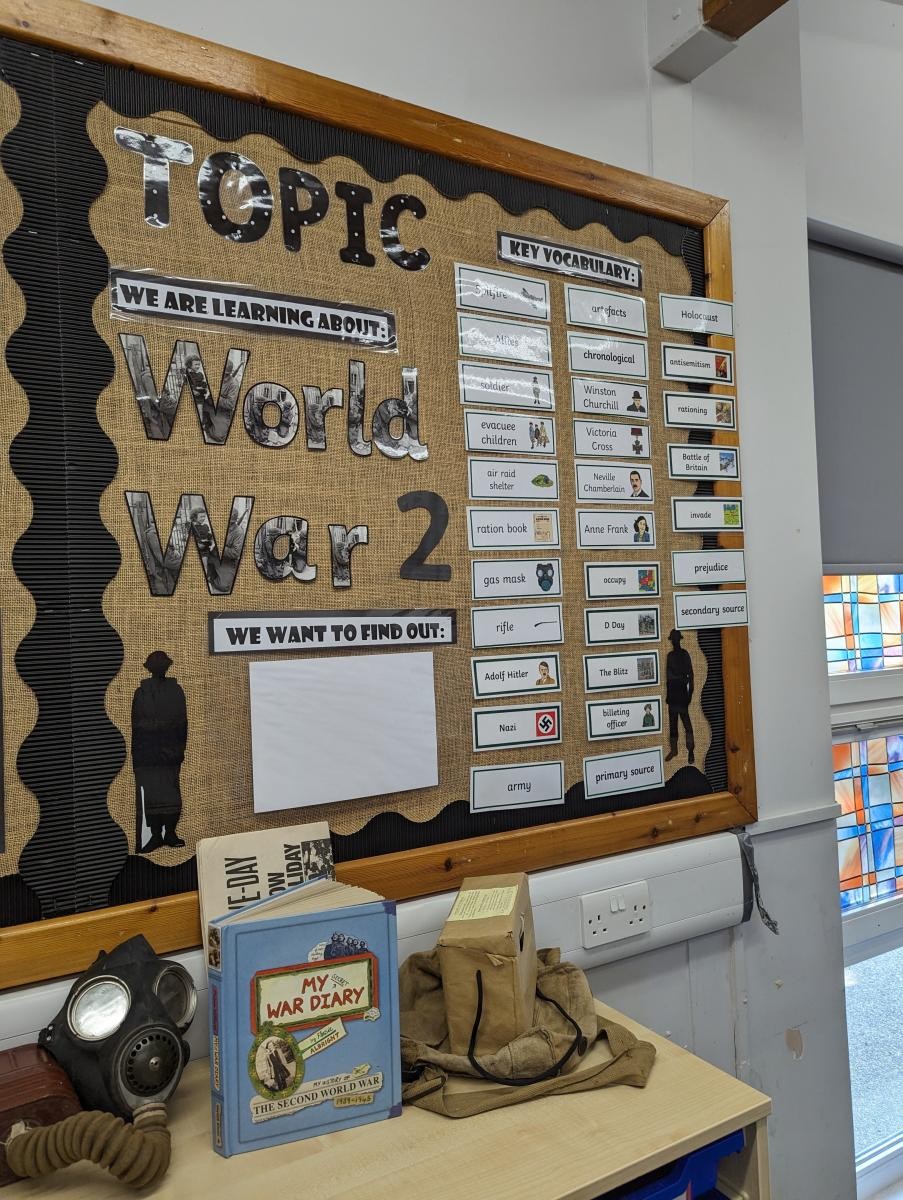
Our history working wall for this half term.
Science
Our first topic in Science is 'Living Things: Classifying Big and Small'. In this topic we will complete the following:
Define the term ‘organism’ and name the seven life processes of all living things.
Describe the work of Carl Linnaeus.
Define the term ‘vertebrate’ and name the vertebrate groups.
Describe the characteristics of fish, amphibians, reptiles,birdsand mammals.
Compare the characteristics of the vertebrate groups.
Define the term ‘invertebrate’.
Describe the characteristics of worms, snails,spidersand insects.
Compare the characteristics of the invertebrate groups.
Name the plant groups.
Describe the characteristics of flowering plants, ferns, mossesand conifers.
Define the term ‘micro-organism’ and name some examples.